
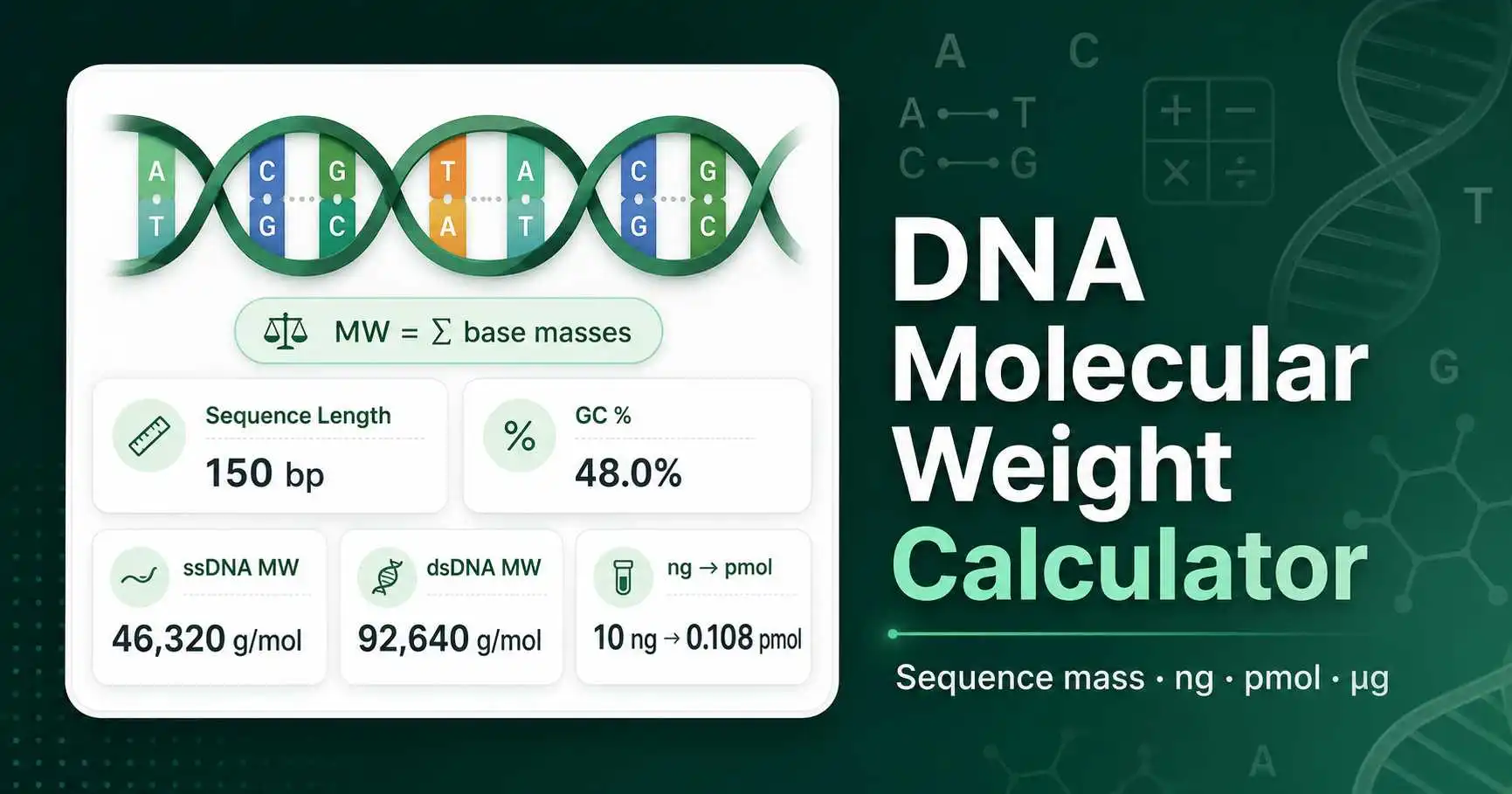
DNA Molecular Weight Calculator for sequence mass
A DNA Molecular Weight Calculator converts a nucleotide sequence into molecular mass. It helps you estimate how much one mole, one nanomole, or one picomole of a DNA molecule weighs. This is useful when you work with PCR primers, synthetic oligos, fragments, inserts, plasmid parts, or classroom molecular biology examples.
The calculator reads A, C, G, and T bases from the sequence. It then counts each base, calculates GC content, estimates single-stranded DNA molecular weight, and calculates double-stranded DNA molecular weight by pairing the entered strand with its exact complement.
How to calculate DNA molecular weight from a sequence
Paste the DNA sequence in 5′ to 3′ direction. The tool ignores FASTA headers, spaces, line breaks, and numbers. Choose single-stranded DNA if you are checking an oligo or primer. Choose double-stranded DNA if the entered sequence represents one strand of a paired fragment.
The result gives molecular weight in grams per mole. It also gives ng per pmol and pmol per microgram, which are common values for oligo stock preparation and mass-to-moles conversion. For simple length-only checks, use the Sequence Length Calculator.
DNA molecular weight formula used here
The single-stranded DNA calculation uses residue masses for A, C, G, and T. The calculator sums the mass contribution from each base and applies an end adjustment based on the selected 5′ end assumption. If you choose 5′ phosphorylated, the tool adds an approximate phosphate adjustment.
For double-stranded DNA, the calculator builds the exact complementary strand composition and adds the mass of both strands. Many quick lab calculations use average base-pair masses, but sequence-based mass is more specific when the exact base composition is known. NEB provides a useful nucleic acid data reference for average base-pair mass and common DNA concentration conversions.NEB Nucleic Acid Data
How to interpret DNA mass and mole results
Molecular weight tells you how many grams one mole of that DNA molecule would weigh. A longer DNA molecule has a higher molecular weight. A G/C-rich sequence also differs slightly from an A/T-rich sequence because each nucleotide has its own residue mass.
The ng per pmol value helps you convert supplier oligo amounts into practical lab quantities. For example, if one pmol weighs 6 ng, then 100 ng contains about 16.7 pmol. The calculator performs this conversion directly, so students and lab workers do not need to repeat the unit math manually.
When to use this DNA Molecular Weight Calculator
Use this calculator when preparing oligo stocks, checking PCR primer mass, comparing DNA fragments, converting ng to pmol, or writing a lab report. It is also useful before using an Oligo Concentration Calculator, because concentration calculations often depend on amount, volume, and molecular weight.
Students can use the tool to understand why base composition affects molecular mass. Teachers can use it to demonstrate the relationship between sequence length, nucleotide composition, and molar amount. Lab workers can use it for quick planning, then verify critical numbers with the oligo datasheet or validated lab protocol.
Common mistakes in DNA molecular weight calculation
Do not enter RNA bases into this calculator. If your sequence contains U instead of T, use an RNA molecular weight tool. Do not enter ambiguous bases such as N, R, or Y when you need exact mass, because those symbols do not identify a specific nucleotide residue.
Make sure you choose the correct molecule type. A single-stranded primer and a double-stranded DNA fragment with the same written length do not have the same molecular weight. Also check whether your oligo is phosphorylated or chemically modified, because modifications can change the final mass.